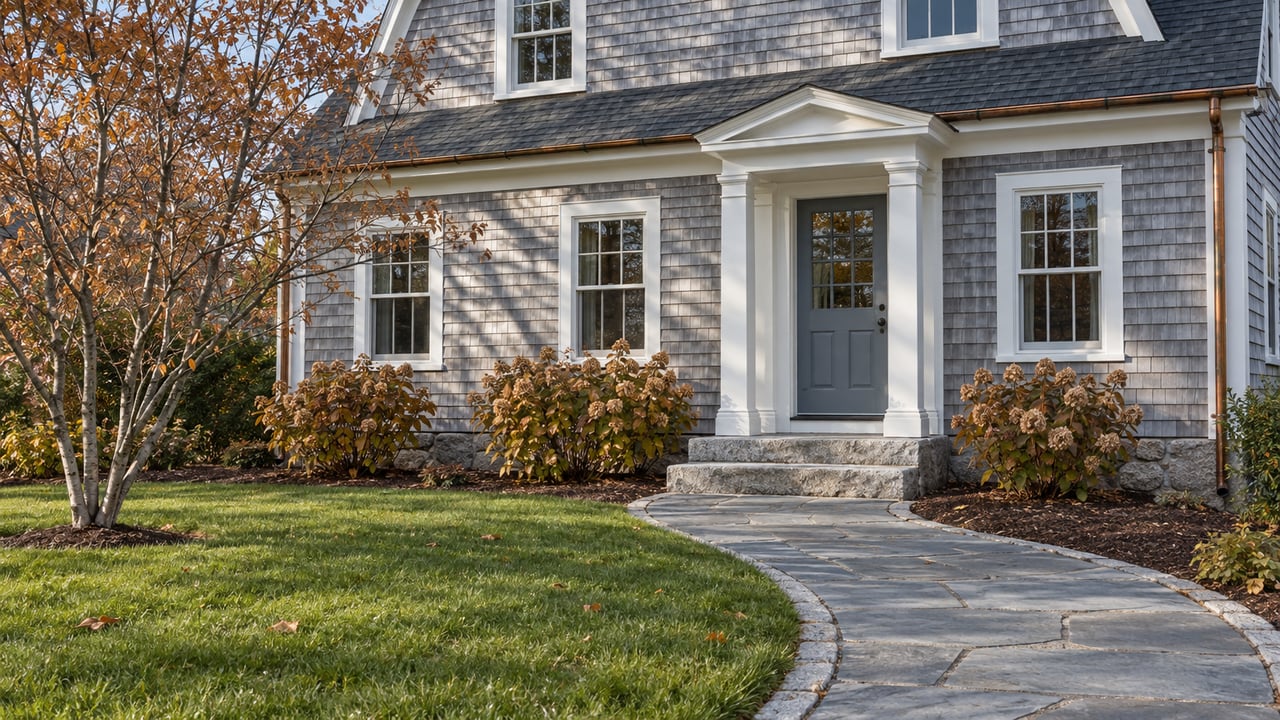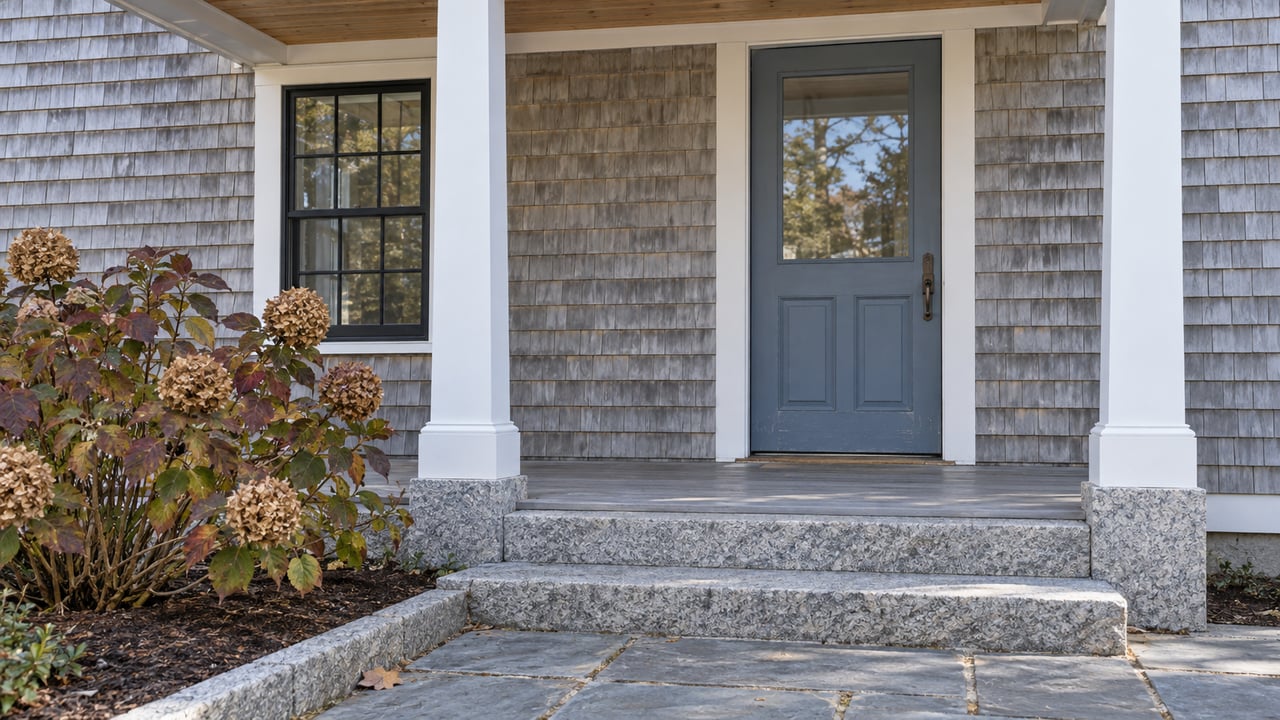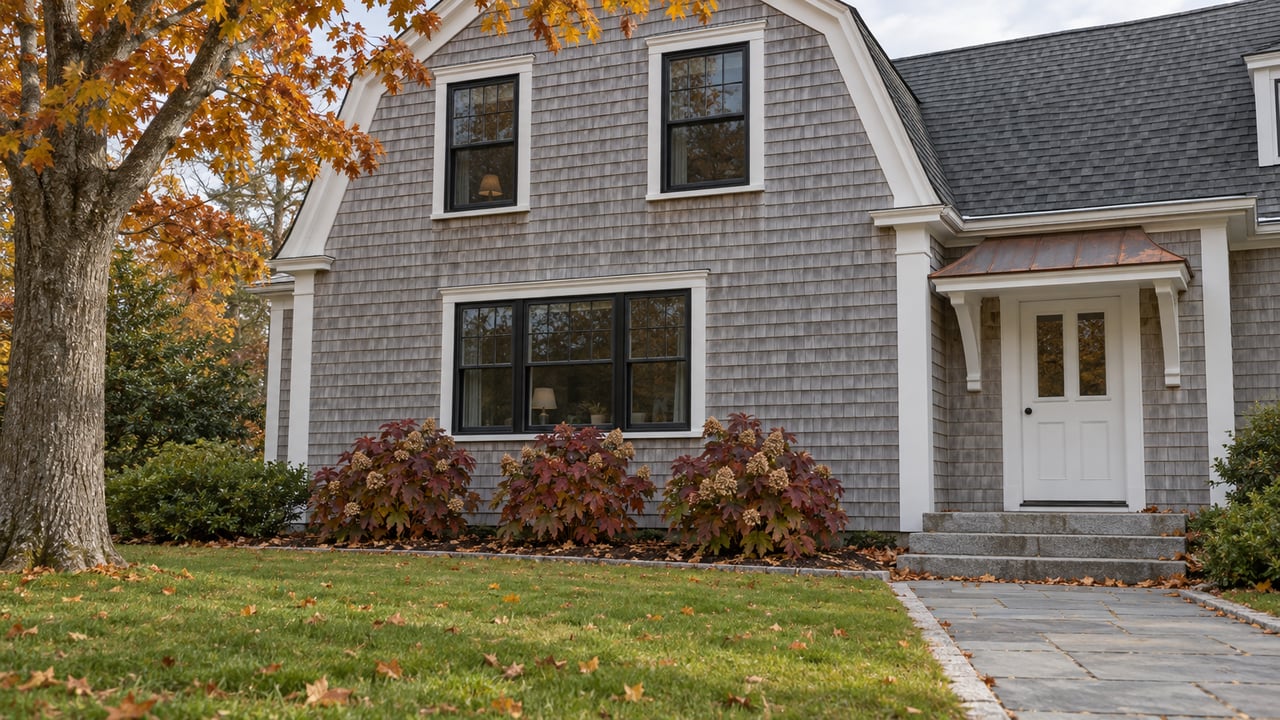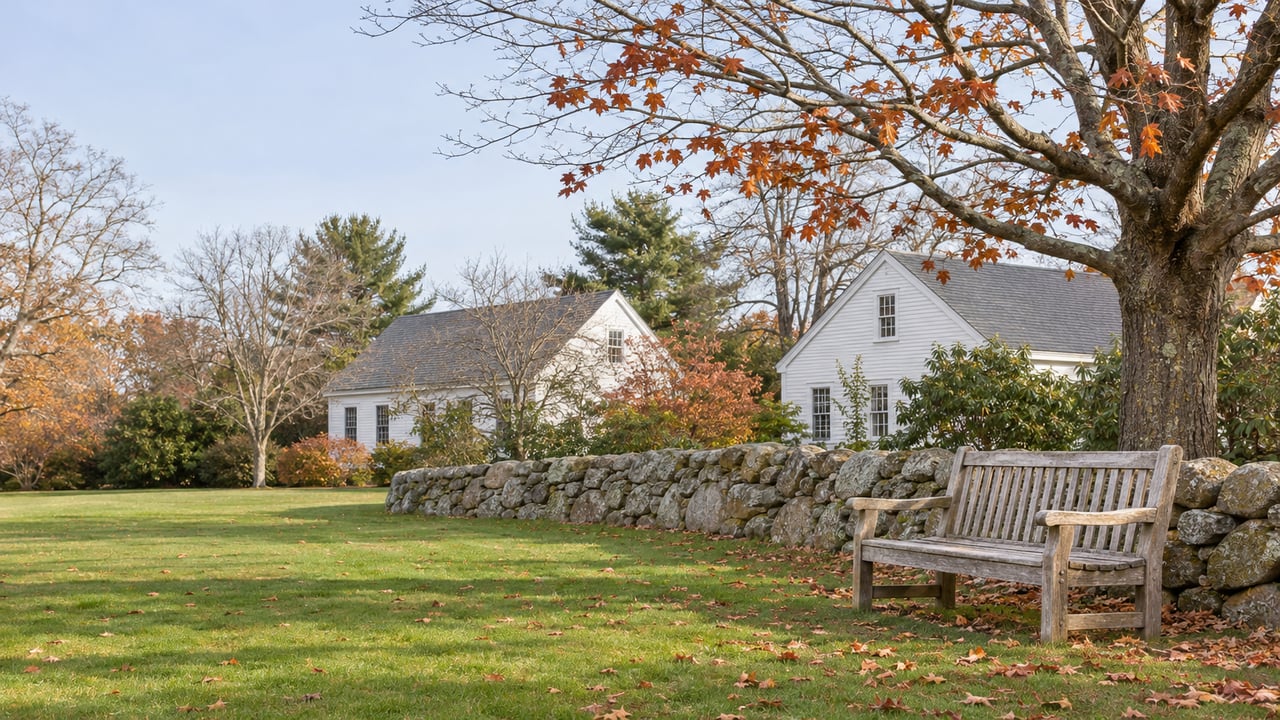
In 1922 Norwell built a new high school and grammar school in the town center, on the lot where Town Hall stands now. In 1935 faulty wiring started a fire that destroyed it along with the older high school and town hall building in front of it. Students spent the next stretch attending afternoon sessions in Hanover until the new school, today's Sparrell School, was built. A year after the fire, the Cushing Center went up as the new Town Hall. Florence Cushing gave $100,000 to build it in honor of her father, Hayward Pierce Cushing, and her uncle, Nathan Cushing. It stands where the town's four-chimneyed Almshouse stood before that building came down in the 1930s.
Those two sites set the pattern for the Village. Fire, demolition and old age took many of the buildings on Norwell's early postcards, yet the town rebuilt its civic and commercial life on the same footprints. That makes the Norwell Historical Society's new book, Jon Bond's Postcards of Norwell, something you can carry down Main Street and match to the lots in front of you.
Two books for three anniversaries
The Society published the book this year with two companions in mind. Its fall newsletter and a South Shore Times announcement list three milestones that all land in 2026. It has been 350 years since the 1676 fighting of King Philip's War in Old Scituate, the area that is now Norwell. The Jacobs Farmhouse, built in 1726, turns 300. The country marks the 250th anniversary of 1776.
Arcadia Publishing lists the book simply as Norwell, a 128-page paperback in its Postcard History Series with a May 12, 2026 publication date. The chapters move from The Village to historic and private homes, houses of worship, public schools, "around town," and "doing business." Later sections cover William Gould Vinal, Assinippi and Accord, and the North and South Rivers. Bond knows the material from the inside. He was president of the Society from 1976 to 1979 and served 20 years on the Norwell Historical Commission.
The second book, North River Packet: Historic Tales of Norwell, was edited by Wendy Bawabe, Betsy Brink and Dan Neumann. It gathers newsletter articles, oral histories, cemetery-tour scripts and a play. Its stories include the 1878 Otis Safe Robbery, Juliette Hammond as Norwell's first woman voter, the dairy farms of Cross Street, and trips to the general store on "the Hill." Bond's postcards show where things were, and the Packet tells what happened in them.
The Village, lot by lot
Many of the Society's then-and-now pairings come from its online Historic Photo Gallery rather than from the book itself. Read alongside Bond's Village chapter, though, the gallery shows how closely the center has kept to its old plan. Starting near Town Hall and working outward:
- Town Hall. It sits roughly on the site of the old high school and town hall that burned in 1935.
- Cushing Center. Built in 1936 as Town Hall, it stands on the Almshouse site, where the town once housed the "ill and infirmed" before any welfare programs existed.
- Central Fire Station. It occupies the lot of the old Fire Department No. 1. When the new station was built, the earlier building was moved to the corner of Lincoln Street and Norwell Avenue.
- Coastal Heritage Bank's drive-through. The Center School stood here. The school is gone, and the bank's drive-through lanes now use the lot.
- Norwell General & Package Store. It operates on the site of the Curtis Store, so the town center still has a store at the address where its old general store did business.
The houses tell a quieter version of the same story. The homes at 661 and 667 Main Street, shown in a Town Center photo, still stand. So do the two houses at 637 and 647 Main that the gallery calls "Parson's Row." It says they look much the same today, apart from the towering elms that once lined them. The George Anson Robbins House at 593 Main dates to about 1836. A style-conscious owner added Victorian gingerbread and a porch in the late 1800s, and both have since been removed. At 42 and 48 Central Street, both houses remain, though 48 has lost its Victorian-style porch.
The center also had a second fire. The gallery holds a photograph of a Town Center fire in 1957, one more event the Village absorbed while its map stayed in place.
Beyond the center, the buildings themselves last
Outside the Village, the pattern changes. In the center, new buildings went up on old lots. Away from it, the old structures themselves tend to last, sometimes in pieces and sometimes in new places.
The Ridge Hill School still stands at the corner of Oak Street and Washington Street, which is Route 53. Its early photo shows a small shed behind the school that housed a Ridge Hill branch of the Norwell Public Library. Farther north on Route 53, at its corner with Route 123 in Assinippi, portions of the Sargent's Restaurant building remain. The Admiral Eaton House at 427 Washington Street was the scene of a murder mystery in the early 1900s and now houses businesses.
Along Main Street, the Jonathan and Joseph Turner House at 869 Main looks much as it did in its old photograph, "horse included," in the Society's words. May Elm Farm at 841 Main was the home of Rev. Samuel May, whom the gallery describes as a renowned prohibitionist. The town's name has an address too. Henry Norwell, whom Norwell is named after, lived at 166 Norwell Avenue. William Delano built the Delano Mansion at 370 River Street in 1803, and it still stands.
At least one farm image from the book can be matched to a lot today. The Society's Fall 2026 newsletter runs a 1930s photo of Stoney Brook Farm that appears in Postcards of Norwell. The farmhouse near 1031 Main Street is gone, but its barn still stands.
The river chapter is the one that moved
Bond's final chapter covers the North and South Rivers. The river is the one part of Norwell that changed course on its own. In 1898 the mouth of the North River shifted, and the North River Boat Club's clubhouse began flooding at every high tide. The building was moved to Winter Street, and the club disbanded.
The shipbuilding era left a more visible marker. The boathouse from the Block House Shipyard can still be seen at the Trustees' Norris Reservation. The newsletter's lead feature this fall, Dan Neumann's "Spring at the Bend: Blockhouse Lane Through the Ages," covers the same ground. It traces the area's Indigenous archaeological record and the shipyard history that followed.
The Society's Fall 2026 newsletter also covers Simon Hill, reached from the bottom of Simon Hill Road off Main Street and from Bowker Street. Citing Prof. William Gould Vinal, the subject of one of Bond's chapters, the Society writes that Native Americans created the trails on the hill and early settlers later widened them. The hill takes its name from Simon, a member of the Mattakeeset Tribe. The Society describes the stone groupings there this way:
"Not a burial ground, but a permanent ceremonial tribute."
Seeing the postcards in person this season
There are two chances before the anniversary year ends to see this history with the people who assembled it:
- Wednesday, November 18, 6:00 to 7:30 p.m. Bond gives an author talk on Postcards of Norwell in the Meeting Room at the Norwell Public Library, 64 South Street. He will discuss how the book came together and show selected images. The room holds 60 people. Registration is on the library's event page, with up to four people per registration and an email reminder sent 48 hours ahead. Book sales at the talk benefit the Society.
- Saturday, December 12, 1:00 to 3:00 p.m. The Society hosts Christmas at the Farmhouse + Anniversary Party at the Jacobs Farmhouse, 4 Jacobs Lane. The Society's events calendar describes it as a party for Joshua and Mary Jacob and the house they built, now 300 years old. The Society's 2026 calendar adds that the museum will be festively decorated for the holidays. The farmhouse also serves as the Society's museum and headquarters.
Both books cost $25 each through the Society's online store, which ships orders weekly by USPS. Donors paid the publishing costs, so all proceeds from book sales go to the Society. For a longer visual record, the Society's postcard collection on Digital Commonwealth runs from 1900 to 1972 and includes streets, municipal buildings, businesses and events.
If you own one of the older houses along Main Street or River Street and want to know where it shows up in Norwell's record, I'm glad to talk it through or share what I know about these blocks. Alice Pierce is happy to help. Let's Connect.